Trump Renames AI "Super Intelligence" by Presidential Executive Order
Inside the US administration, the word "AI" is now banned: the White House is mandating "SI," for Super Intelligence, and tasking its science advisor with writing the federal definition.
In brief
On September 29, 2026, Donald Trump signed an Executive Order replacing "Artificial Intelligence" with "Super Intelligence" across all non-legislative documents of the federal executive branch. The text tasks the Assistant to the President for Science and Technology with drafting an official definition. It's a vocabulary decision, but it sets the political and symbolic frame in which Washington thinks about the technology.
🍺 Bar-stool version
The White House found a way to make AI more powerful without touching a single GPU: change its name. From now on, in the US administration, you don't say "AI" anymore, you say "Super Intelligence" — kind of like renaming your Clio a "Formula 1" to save time on the highway. The best part is that Biden's policies retroactively became "SI" policies, while the flagship plan from July 2025 is still called the AI Action Plan. It's funny, but when a state officially decides what "superintelligence" means, it also decides what we're supposed to expect from this technology, and what we're no longer allowed to fear about it.
Key takeaways
- 1
An Executive Order signed by Donald Trump replaces the terms "Artificial Intelligence" and "AI" with "Super Intelligence" and "SI" across the entire federal executive branch.
- 2
The requirement covers official correspondence, public communication, and public policy documents that are non-legislative: laws passed by Congress are not affected.
- 3
Agencies are instructed to "no longer recognize" the old terms AI and Artificial Intelligence.
- 4
The Assistant to the President for Science and Technology (APST) must propose a federal definition of "Super Intelligence" and identify the executive measures needed to implement it.
- 5
The White House justifies the change by arguing that "artificial" suggests mere imitation of human intelligence, whereas current technologies allegedly surpass it.
- 6
The text recalls the administration's track record: over $5 billion for the Genesis Mission, the July 2025 AI Action Plan (over 90 federal actions), and a National Super Intelligence Policy Framework unveiled in March 2026.
What the Order Says
The core of the text is lexical. All federal departments and agencies must use "Super Intelligence" and "SI" in their official communications and documents, and stop "recognizing" the terms "Artificial Intelligence" and "AI."
The scope is precisely limited to "non-statutory" documents of the executive branch. In other words, existing laws that refer to artificial intelligence remain unchanged: a presidential order cannot rewrite law passed by Congress.
The order does not yet provide a definition. It tasks the APST, the president's science advisor, with proposing one that "reflects the state of this extraordinary frontier technology," and with listing any additional executive actions needed.
The White House's Argument
The justification boils down to one idea: the United States is "the world leader" in the field and must use a name worthy of its promise. The fact sheet notes that the country is "the birthplace" of AI, whose development it has led for over 70 years.
The term "artificial" is considered reductive. According to the text, it implies mere imitation or automation of human intelligence, whereas today's technologies allow Americans "to achieve what was previously impossible."
The new name is also meant to serve as a steering tool: it would ensure agencies stay "focused" on expanding capabilities and applications for the economy and everyday life of Americans.
A Political Record Rewritten in "SI"
The second half of the fact sheet lays out the administration's record, entirely reread with the new vocabulary. Biden administration policies, scrapped as soon as Trump returned to power, are now described as "SI" policies deemed "excessive and harmful."
Three milestones are cited. The Genesis Mission, funded with over $5 billion, aims to accelerate breakthroughs in science, medicine, energy, and industry. The July 2025 AI Action Plan lists more than 90 federal actions to "win the race." The March 2026 National Super Intelligence Policy Framework outlines legislative recommendations.
The text stumbles on an inconsistency: the AI Action Plan keeps its original name, even though the sentence describing it already speaks of the "race to SI." The vocabulary change applies to the present, but the documentary past stays in "AI."
What the Text Doesn't Say
The order creates no budget, no technical requirement, and no rule for private companies. Its scope, for now, is purely vocabulary, pending the APST's definition.
It also doesn't specify how the upcoming definition will relate to the meaning the term already has in research. "Superintelligence" there generally refers to a system that would vastly surpass humans in nearly every domain — a threshold the fact sheet doesn't explicitly claim to have reached.
“The name Super Intelligence conveys the true capabilities of the technologies being developed today”
“not simply imitating or automating human intelligence as is implied by the term “Artificial Intelligence.””
“The United States is the world leader in Super Intelligence, and the Federal government should use a name that reflects the full promise and opportunity of these technologies.”
Why it matters
On the technical level, nothing changes: models don't become more capable just because they're renamed. But this vocabulary decision isn't trivial. In the AI debate, "superintelligence" is the word safety researchers use to describe the maximum risk threshold, the one that justifies calls for caution. By officially attaching it to today's tools and pairing it solely with "promise" and "opportunity," the White House drains the term of its warning weight and installs a purely offensive reading, in line with the "race" framing running through the whole text. The real stakes will play out in the federal definition the APST must propose. Depending on whether it's broad or narrow, it could serve as a legal lever to classify, fund, or exempt certain systems. There remains a very concrete risk of confusion: laws will keep referring to "AI," the executive branch will say "SI," and international partners will have to translate. An order about words can also be an order about the frame of thought.
For you
Put it to work on your sources.
Free: this week's articles and three sources of your own. Pro: the whole archive and your sources, from €8/month.
For your team
The same machine, on your topics.
A space in your colours, your watch angles, your curators. Pilot open to three companies.
Read next
 #benchmarksToday
GPT-6.1 Sol: Almost Astra, for a Fifth of the Price
OpenAI updates its mid-tier model and promises flagship-level performance on code, agents, and professional work, with a bill cut fivefold.
Source · OpenAI · Introducing GPT-6.1 Sol
 #chatgptToday
OpenAI launches dots, AI agents that work for you 24/7
Powered by GPT‑6 Astra, dots get their own computer in the cloud, connect to over 4,000 apps, and take initiative before you even ask.
Source · OpenAI · Introducing dots
 #nvidiaYesterday
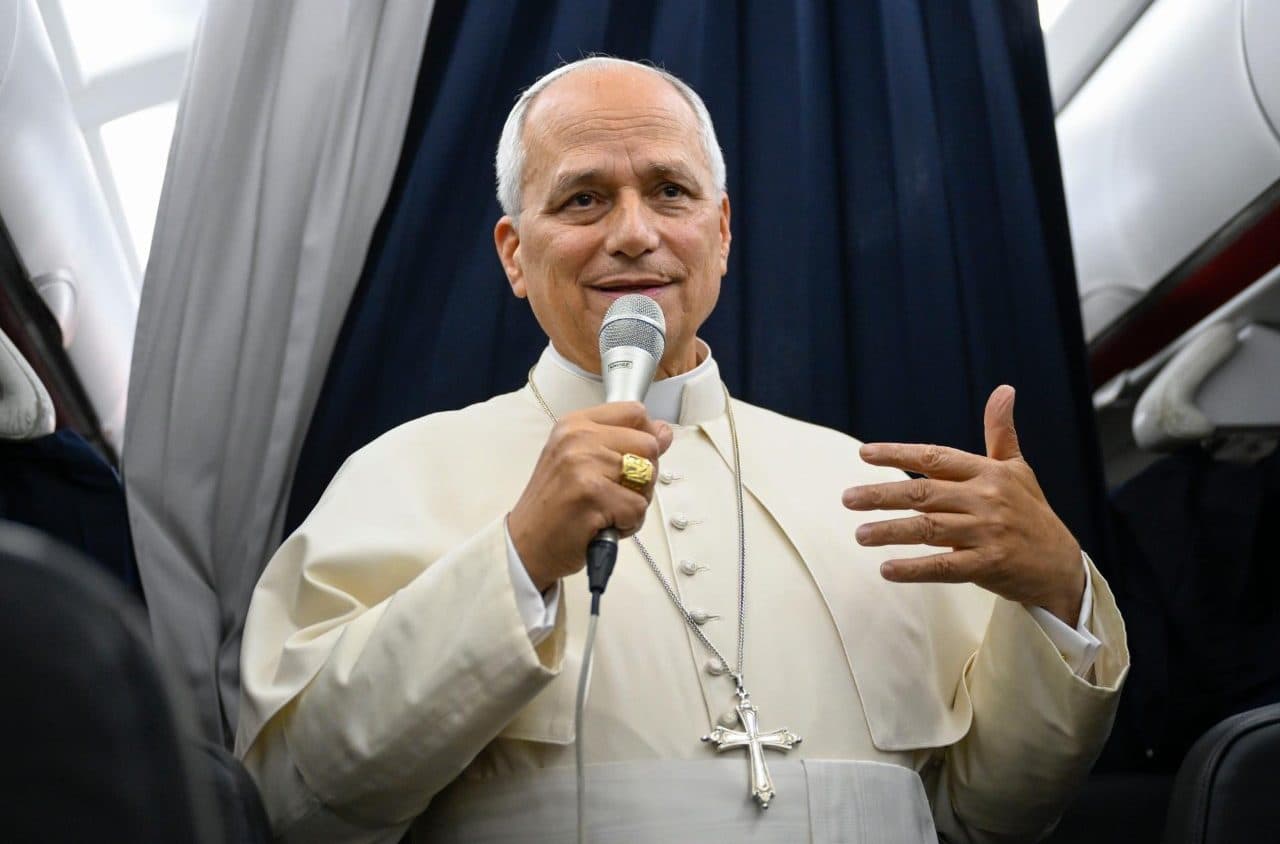
Leo XIV on AI: "I sleep at night," but Nvidia gets a scolding
On the flight back from France, the pope calls warnings about catastrophic AI risks serious and points out the contradiction in Nvidia's CEO stance on regulation.
Source · Vatican News · Pope: Wars are senseless; Russia and Ukraine should sit down to talk