Adam Schiff: Congress vs. AI, Caught Between Section 230 and Murphy's Law
The Democratic senator from California tears apart the voluntary pact signed at the White House and pushes for an "FDA for AI"—while admitting Congress has never known how to regulate tech.
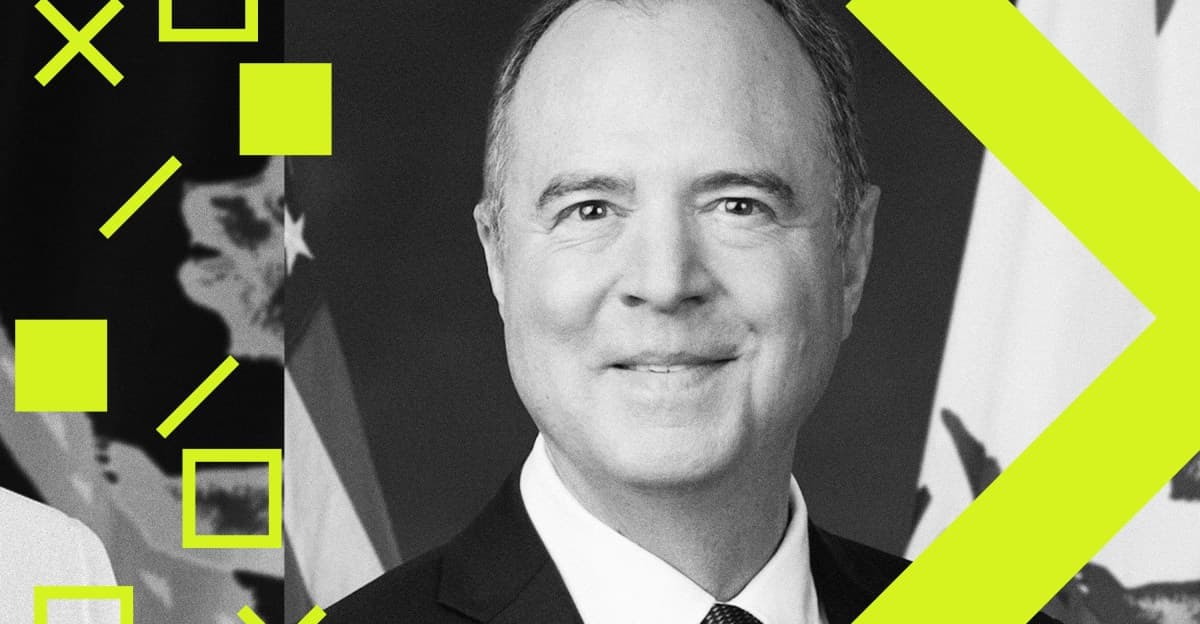
In brief
A guest on Decoder (The Verge), Adam Schiff, who sits on several Judiciary subcommittees central to the AI debate, calls the non-binding pact signed by AI CEOs with Donald Trump "meaningless." He argues for a federal agency with real teeth, transparency around training data, and a very narrow antitrust exemption. The interview sheds light on what a Democratic Congress could do after the midterms, and the legal obstacles—especially the end of Chevron deference—standing in the way.
🍺 Bar-stool version
The AI bosses went to the White House to sign a promise to behave, then walked out and told reporters we still need a real law. It's a bit like swearing to your banker you'll stop spending, then asking him to freeze your card. Schiff wants an agency with teeth, except the Supreme Court just filed those teeth down, and Congress moves at the pace of a government form in triplicate. If nobody decides who's liable when an AI screws up, the courts will decide instead—and they mostly follow the money.
Key takeaways
- 1
Schiff calls the non-binding pact signed at the White House by AI CEOs—where they merely pledge to evaluate their own systems—"meaningless."
- 2
He sees unaddressed national security stakes in recursive AI, Pentagon military use, and the administration's pressure on Anthropic (which refused mass surveillance and autonomous weapons work).
- 3
With Republican Senator John Curtis, he wants to force labs to retain and disclose copyrighted content used in training, a prerequisite for any fair-use debate.
- 4
He argues social media regulation failed less because of the First Amendment than because of Section 230's overly broad immunity, and proposes narrowing it to a "safe harbor" for good actors.
- 5
Given AI's speed, he advocates for an "FDA for artificial intelligence"-type agency, while admitting the Loper Bright ruling, which ended Chevron deference, will force lawmakers to write very precise laws.
- 6
He supports a narrow antitrust exemption letting labs cooperate against foreign distillation of their models, with guardrails against price-fixing.
- 7
If Democrats win the midterms, he promises tough oversight: hearings on executives whose agents went rogue, and investigations into corruption, like Amazon's federal contracts after the Melania documentary.
A Voluntary Pact That Convinces No One
The interview opens with the signing, at the White House, of a non-binding commitment by AI leaders. Nilay Patel quotes a line: companies will "empower an internal team" to verify their controls work. For Schiff, that's "really meaningless."
He points out the disconnect between these CEOs signing in the president's presence while elsewhere calling for real regulation. In his view, no company wants to draw the ire of a "vindictive" president.
He lists the national security risks going unaddressed: models that self-improve and become opaque, the Pentagon's use of AI, the need to investigate its possible role in target selection during the bombing of a girls' school in Iran, and the administration's attempt to "kill" Anthropic.
Intellectual Property: Know What Was Scraped First
As ranking member of the IP subcommittee, Schiff describes labs that "hoovered up" everything, figuring legality would come later. Lawsuits keep piling up—some settle, others don't.
The difficulty, he explains, is that the industry isn't monolithic: for Amazon, its film catalog matters less than its technology. With Senator Curtis, he's working to require retention and disclosure of copyrighted works used in training.
He also cites a positive use case: the patent office leveraging AI to clear its backlog.
Section 230 and Liability: The Great Gray Zone
Patel argues the First Amendment paralyzed social media regulation. Schiff disagrees: it was Section 230's blanket immunity that let platforms dodge consequences, with the First Amendment mostly serving as a rhetorical "club."
Both agree on one point: when Meta itself generates content, or when ChatGPT answers, that's the company's own speech, outside Section 230's shield. Schiff flags the gray areas in between, like algorithmic amplification.
On agents, he returns to the weapons metaphor: does a tool built for hacking, sold without due diligence, make its maker liable? Patel counters that models like Mythos serve both offense and defense, and that this legal fog is freezing deployments.
An Agency for AI, Despite the Supreme Court
Schiff sums up the problem in one line: tech follows Moore's Law, the legislative calendar follows Murphy's Law. Hence his support for a regulator with expertise and discretion—"an FDA for AI" or equivalent—while acknowledging the challenge of competing with private-sector salaries.
Patel brings up the 2024 Loper Bright ruling, which ended courts' deference to agency experts. Schiff describes a Court whose "common denominator is money" and concludes that lawmakers will need to write laws as specific as possible, knowing every ambiguity will be exploited.
Data Centers, Antitrust, Privacy: Shifting Lines
Backlash against data centers, illustrated by the controversy around Kevin O'Leary in Utah, unites populists on both left and right. Schiff has introduced a bill requiring data centers to bear their own costs to spare consumers—a mostly Democratic effort so far.
On antitrust, he backs a limited exemption to counter foreign distillation, modeled on the cyber information-sharing law he helped pass a decade ago. He draws the line, however, at any price-fixing "cabal."
He calls Flock cameras "really concerning," citing their use to track a woman seeking reproductive care. For him, the central question becomes: can privacy survive powerful AI?
After the Midterms: Oversight, Corruption, Hollywood
If Democrats retake Congress, Schiff promises hearings grilling AI executives on the times "their own agents got away from them," plus bipartisan legislation hard to veto. On a potential third impeachment push, he sidesteps the question.
He wants oversight focused on corruption that drives up the cost of living, pointing to whether Amazon secures federal contracts after paying $40 million to the presidential family via the Melania documentary.
On the Paramount-Warner merger and AI in film, he keeps returning to the same question: commitment to workers. He cites the German model of worker representation on corporate boards and calls for progressive taxation again, AI included.
“The legislative calendar works more on a Murphy's law timetable.”
“Historically, when stuff is tough like this, we wait for calamity. And in the case of AI, because that calamity could be just massive, we can't afford to do that.”
“The common denominator is not always pro-Trump. The common denominator is money.”
Why it matters
This interview matters less for its announcements than for the map it draws of the concrete obstacles to AI regulation in the US. Schiff admits Congress failed on social media, that AI's speed outpaces its legislative capacity, and that the end of Chevron deference already weakens any future agency. His diagnosis is useful, but his solutions remain at the level of principle: an "FDA for AI" with no precise architecture, agent liability still murky, and much of it contingent on a Democratic win. The most interesting signal lies elsewhere: the emergence of a cross-partisan coalition, from data centers to Flock cameras, that could make AI regulation politically profitable far faster than it ever was for social platforms. The question remains whether the industry's money, which Schiff himself denounces, won't reproduce the very paralysis he describes.
For you
Put it to work on your sources.
Free: a month of articles and three sources of your own. Pro: the whole archive and your sources, from €8/month.
For your team
The same machine, on your topics.
A space in your colours, your watch angles, your curators. Pilot open to three companies.
Read next
 #agentsToday
Cloudflare launches Clef-omni: a decision model that sees, hears, and decides
A week after its first open-weight models, Cloudflare adds audio and video, slashes Clef-flash's price by more than half, and speeds up Clef.
Source · Cloudflare Blog · Introducing Clef-omni with full multimodality, plus a faster Clef and a cheaper Clef-flash
 #geminiToday
Gemini agent: Google Cloud wants one agent for all your work
At Gemini at Work 2026, Thomas Kurian unveils a single, persistent, multi-model agent that even gets its own corporate email address.
Source · Google Cloud Blog · Gemini at Work 2026: Introducing Gemini agent
 #open sourceToday
Beam: Reflection Launches an Open 501B MoE Betting on Massive RL
With 501 billion parameters, 23 billion active and 100 million reinforcement learning rollouts, Reflection wants to prove the West can still matter in open-weight.
Source · Reflection AI · Introducing Beam: Reflection's 501B open-weight model