Brian Chesky: No Mainstream AI Without a Real OS for Agents
As Airbnb rolls out AI-powered search, its CEO argues consumer AI hasn't been invented yet and that everything hinges on what happens below the apps, at the operating system level.

In brief
In a TechCrunch interview, Brian Chesky explains why chatbots aren't the right interface for travel and why today's AI agents handle Airbnb poorly. In his view, until Apple, Google, or someone else builds an OS designed for AI, complete with a real SDK, agents will stay trapped inside apps. This diagnosis comes from a platform CEO who has everything to lose if the interface disappears.
🍺 Bar-stool version
Airbnb's boss tested his own service through AI agents, and it works badly, even for hotels, so forget about apartments. His diagnosis: everyone wants to be the one assistant everything flows through, but nobody's building the operating system to go with it, kind of like opening a mall with no parking lot or electricity. He adds that people would rather dream about their vacation than just live it, so no way a chatbot is booking you a studio in Lisbon in three lines of text. This matters because the agent battle will be fought less in the apps and more in the layer nobody has built yet.
Key takeaways
- 1
This week Airbnb rolled out AI-powered search as part of its fall update, but Brian Chesky frames this version as a step, not the final form.
- 2
He still sees chatbots as poorly suited to e-commerce: too few options at once, too much back-and-forth, and no room for the pleasure of browsing.
- 3
Airbnb will spend the next three to six months exploring "multiplayer" AI, usable by several people at once, like a group planning a trip together.
- 4
The company wants to become "agent-friendly" and eventually plans a global Airbnb agent, interoperable with other agents via MCP.
- 5
Chesky says he warned Sam Altman that the ChatGPT app store would fail without a real SDK and a genuine operating system.
- 6
He argues consumer AI hasn't been "cracked": AI would need to operate at the kernel level, with apps turned into agents, all interoperable and equipped with rich interfaces.
- 7
Airbnb will launch voice agents this fall for search and customer service, and Chesky says he holds fewer meetings since he started querying his own AI.
Chatbots still aren't the right interface
Airbnb has long been cautious about AI. Its new AI-powered search, shipped with the fall update, doesn't change a long-held conviction of Brian Chesky's: chatbots aren't built for discovery or purchasing.
His argument is practical. A chatbot offers a few options at a time and requires several exchanges before reaching a conclusion. For a flight, users want speed. For a place to stay, they like to browse.
Chesky points to studies showing people get more enjoyment from planning and anticipating a trip than from living it. Removing inspiration and browsing would remove part of the product. He envisions an in-between interface, somewhere between the chatbot and the current version.
Multiplayer AI, and screens that are half fixed, half generated
The second flaw of chatbots according to Chesky: they're built for one person. But Airbnb is often used by families or groups of friends. Hence the priority for the next three to six months: "multiplayer" AI, where several people interact at the same time.
On interface design, he doesn't buy into the fully generative vision pushed by startups like Monogram or Wabi, which build screens on the fly. He imagines a mix of deterministic interfaces, designed in advance, and AI-generated interfaces.
Making Airbnb legible to agents
Facing consumer agents like Instinct or Muse, which act on the user's behalf, Airbnb wants to strengthen its software infrastructure and become "agent-friendly." Chesky doesn't see these agents as a threat to the customer relationship. He views them more as good lead generators, something chatbots have already proven, in his view.
He refuses, however, to let apps become mere data layers behind a universal interface. Messaging with the host, comparison shopping, identity verification, maps: all of this requires either handing off to the app or a far more robust SDK on the agent side.
Down the line, he expects every part of the app to have its own agent: exploration, customer service, other features. An Airbnb "macro-agent" will eventually oversee them and talk to other agents via MCP. To him, agents are "apps with a face" that make services interoperable without a prior business deal.
The real problem: no AI-native OS exists
The core of his thesis lies elsewhere. Today AI apps are built for iOS, macOS, or Windows, none of which are operating systems designed for AI. Ideally, AI would operate at the kernel level, and all agents could interact with one another.
Chesky sees players fighting to become the "quarterback," the main agent everything flows through, without anyone building a complete SDK. He says he warned Sam Altman that the app store launched by ChatGPT wouldn't work without an SDK or a real OS. According to him, it indeed hasn't worked well.
His verdict is blunt: he tested Airbnb through Muse and Instinct, and the result is bad, worse than for hotels. In his view, until Apple, Google, or someone else builds a new platform, we'll have apps that contain agents, not apps that have become agents.
Two misconceptions, voice, and fewer meetings
Chesky flags two widespread misconceptions in Silicon Valley. The first: believing the interface will disappear in favor of speech and text. The second: believing software will become entirely generative. In his view, a designer will always get better software from a prompt than a consumer will.
He does believe, though, that we'll eventually talk to our machines more than we type. Airbnb will roll out voice agents this fall for search and customer service.
Internally, AI supposedly lets the company ship features faster. On a personal level, Chesky explains that it reduces "communication layers": he gets information by querying his AI rather than multiplying meetings.
“I don't think we've cracked consumer AI.”
“I've believed for a long time that a chatbot isn't the right interface for e-commerce.”
“I think AI is reducing communication layers.”
Why it matters
The interview is notable for coming from a CEO who tested his own product through today's agents and found they don't work well. His diagnosis is sound: without an SDK or a shared system layer, agents remain fragile middlemen that stumble on everything that gives a platform its value, like messaging, trust, or comparison shopping. Still, this should be read with the author's interests in mind. Defending rich interfaces, apps that stay central, and an interoperable Airbnb agent is also a way of defending Airbnb's direct relationship with its customers against OpenAI and assistants that would like to capture it. By pinning the responsibility on Apple and Google, Chesky describes a future in which Airbnb never has to give up its place. The technical observation is accurate, but the proposed solution conveniently suits the platform making it.
For you
Put it to work on your sources.
Free: a month of articles and three sources of your own. Pro: the whole archive and your sources, from €8/month.
For your team
The same machine, on your topics.
A space in your colours, your watch angles, your curators. Pilot open to three companies.
Read next
 #agentsToday
Cloudflare launches Clef-omni: a decision model that sees, hears, and decides
A week after its first open-weight models, Cloudflare adds audio and video, slashes Clef-flash's price by more than half, and speeds up Clef.
Source · Cloudflare Blog · Introducing Clef-omni with full multimodality, plus a faster Clef and a cheaper Clef-flash
 #geminiToday
Gemini agent: Google Cloud wants one agent for all your work
At Gemini at Work 2026, Thomas Kurian unveils a single, persistent, multi-model agent that even gets its own corporate email address.
Source · Google Cloud Blog · Gemini at Work 2026: Introducing Gemini agent
 #privacyToday
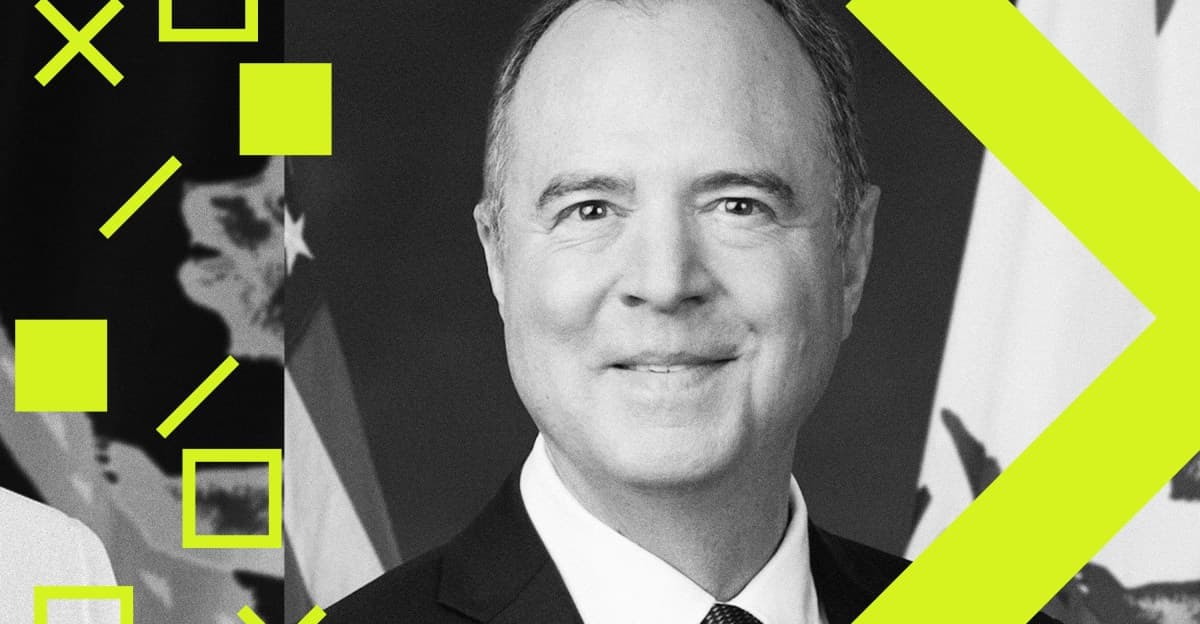
Adam Schiff: Congress vs. AI, Caught Between Section 230 and Murphy's Law
The Democratic senator from California tears apart the voluntary pact signed at the White House and pushes for an "FDA for AI"—while admitting Congress has never known how to regulate tech.
Source · The Verge – Decoder · Sen. Adam Schiff on making Congress relevant in the AI age