$10.3 Trillion for AI: The Data Center Bill Flying Under the Radar
A Columbia economist sizes up the AI buildout beyond rail and highways—and worries most about how it's being financed.
In brief
According to a paper presented at the Brookings Papers on Economic Activity, US investment in AI infrastructure could reach $10.3 trillion between 2025 and 2032, or 3.63% of GDP per year. Stijn Van Nieuwerburgh (Columbia) observes that this financing is shifting from the balance sheets of large companies toward opaque off-balance-sheet structures: joint ventures, private credit, securitization, SPVs. Without yet calling it systemic risk, he calls for more measurement and transparency while the sector's structure remains malleable.
🍺 Bar-stool version
We're talking $10.3 trillion in data centers, chips, and power plants by 2032—more, relative to the economy, than America's canals, railroads, electrification, and highways combined. So far, nothing abnormal; humanity loves building gigantic things. The problem is that the debt no longer sits in the accounts of tech giants but in off-balance-sheet arrangements with charming names, tucked away like boxes in a cousin's garage. The day things wobble, nobody will know exactly who owes what to whom, and in finance, that's rarely the start of a story that ends well.
Key takeaways
- 1
The paper projects $10.3 trillion in AI infrastructure investment in the US between 2025 and 2032: data center buildings, power systems, grid, chips, and equipment.
- 2
This represents an average of 3.63% of US GDP each year over the period.
- 3
Relative to the size of the economy, this buildout would exceed the great historical booms: canals, railroads, electrification, highways, and telecommunications.
- 4
Financing is migrating from the transparent balance sheets of large companies toward off-balance-sheet structures: joint ventures, private credit, securitization, SPVs, lease commitments, loan guarantees.
- 5
These arrangements depend on cash flows and asset values, exposed to uncertain AI demand, rapid technological obsolescence, access to energy and hardware, and the solidity of a small number of tenants.
- 6
The author considers it premature to speak of systemic risk comparable to past credit booms, but fears correlated exposures could remain invisible until a downturn.
- 7
His main recommendation: improve measurement and transparency now, while the sector's capital structure is still taking shape.
A bigger project than the railroads
The figure is striking: $10.3 trillion invested between 2025 and 2032 in data centers, power supply, networks, and specialized chips. That's 3.63% of US GDP, every year, for eight years.
Stijn Van Nieuwerburgh places this amount in historical perspective. According to him, the projected buildout would be larger, relative to the economy, than the great American investment cycles: canals, railroads, electrification, the highway network, and telecommunications.
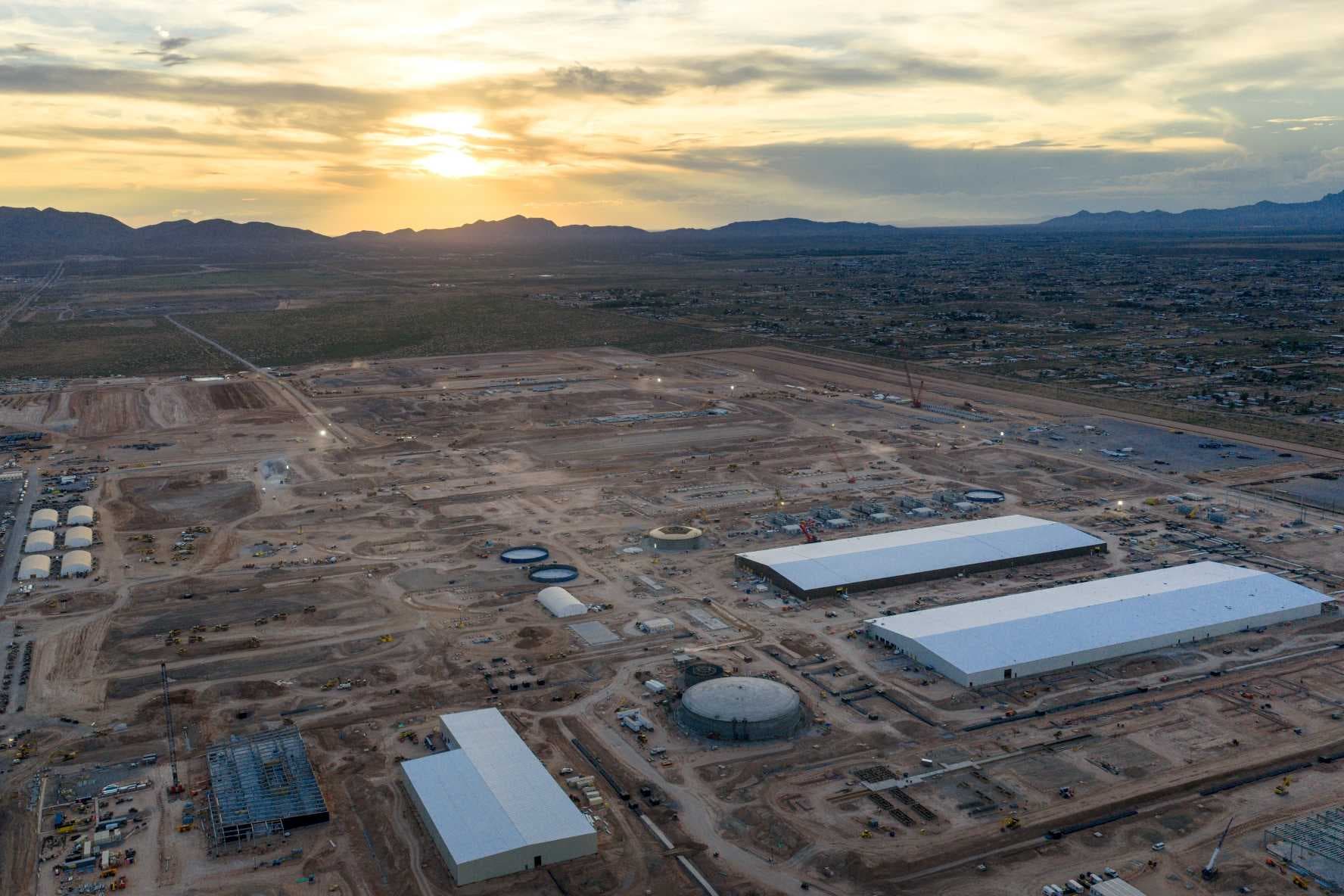
The illustration chosen by Brookings sums up the scale: a $10 billion Meta data center project, spread across roughly 1,000 acres near El Paso, Texas.
The debt changes address
The heart of the paper isn't the amount, but the financial plumbing. Initially, hyperscalers paid for their data centers with their own balance sheets, visible and audited.
The risk is now shifting toward off-balance-sheet structures: joint ventures, private credit, securitization, special-purpose vehicles, lease commitments, loan guarantees. All arrangements that remove exposure from the consolidated accounts of large companies.
These vehicles rely on the revenue and collateral value of AI assets. But both variables depend on uncertain demand, technology that depreciates quickly, access to energy and hardware that isn't guaranteed, and the credit quality of a handful of tenants.
Not yet a bubble, but a blind spot
The author refrains from crying crisis. He deems it "premature" to conclude that AI infrastructure already poses a systemic risk comparable to previous credit booms.
His concern is about visibility. Off-balance-sheet structures matter because they can make correlated exposures hard to observe before a downturn. When multiple arrangements depend on the same tenants and the same demand assumptions, risk concentrates without anyone seeing it.
Hence his recommendation: at this stage, the most useful contribution from regulators would be to improve measurement and transparency, while the sector's capital structure isn't yet set in stone.
A paper in a series on AI
This work is one of three papers presented on September 25 at the BPEA fall conference dedicated to the risks and promises of AI, alongside "Why is AI so contentious" and "The vanishing advantage of specialization."
This is a conference draft version, so it may evolve after discussion with the economists present.
“The projected buildout would be larger relative to the economy than the major U.S. canal, railroad, electrification, highway, and telecommunications investment booms.”
“Off-balance sheet structures matter … because they may make correlated exposures hard to observe before a downturn.”
“The most important policy contribution at this stage may therefore be to improve measurement and transparency while the capital structure of the industry is still evolving.”
Why it matters
The debate over a potential AI bubble often focuses on stock valuations or the capex announced by hyperscalers. This paper usefully shifts the focus to the plumbing: who actually carries the debt, and where. Financial history shows crises rarely originate where risk is visible, but where it has been repackaged and dispersed, as with securitization before 2008. The parallel has its limits, and the author himself refuses to call it systemic risk. But the signal is clear: a sector dependent on a few tenants, on rapidly obsolescing assets, and on uncertain access to electricity, increasingly financed off-balance-sheet, ticks several boxes of fragility. The recommendation—measure before it's too late—seems modest; it's mainly the only one still possible while nobody knows exactly how much is at stake.
For you
Put it to work on your sources.
Free: this week's articles and three sources of your own. Pro: the whole archive and your sources, from €8/month.
For your team
The same machine, on your topics.
A space in your colours, your watch angles, your curators. Pilot open to three companies.
Read next
 #ai agents22 Sept
In 46% of Companies, the CHRO Isn't in the Room
IBM's 2026 CHRO study quantifies what separates companies that turn AI into growth from those that turn it into cost-cutting.
Source · IBM Institute for Business Value · Designing the Thinking Organization — 2026 CHRO Study
 #regulation22 Sept
California Reins In Data Centers: Seven Laws at Once
Mandatory reporting on water and electricity, and no more environmental fast-tracking: Sacramento wants the AI industry to pay its own grid bills.
Source · Governor of California (gov.ca.gov) · Governor Newsom signs most comprehensive data center laws in the nation, providing communities more control on water, electricity, and land use
 #data centers21 Sept
Jensen Huang: “There's a 0% chance 2030 is the end of the world”
Nvidia's CEO responds to CBS News on calls to slow down AI, regulation, China, and data center backlash.
Source · CBS News · Extended interview: Nvidia CEO Jensen Huang on fears about AI