a16z's Top 100: Consumer AI is Wide, But Not Deep
The seventh edition of Andreessen Horowitz's ranking adds spending data for the first time, revealing a market held together by a handful of power users.

In brief
a16z has published the seventh edition of its Top 100 consumer AI apps ranking, this time adding a ranking by actual spending on US credit cards (YipitData). The finding is stark: nearly half of Americans use AI, but only 4.5% pay for a ChatGPT, Gemini, or Claude subscription, and the top 1% of payers outspend the bottom half combined. To widen its base, consumer AI will likely have to return to the old web playbook: advertising and transaction fees.
🍺 Bar-stool version
Basically, half of Americans have already tried AI, but barely 4.5% pay for ChatGPT, Gemini, or Claude. Meanwhile, the top 1% of die-hards are dropping $903 a month — like a gym member who actually shows up. So the industry is rediscovering a groundbreaking idea: ads and commissions, just like Google and Facebook twenty years ago. If you were wondering when you'd go back to being the product, the answer is: soon.
Key takeaways
- 1
In August, 4.5% of US consumers had a personal paid subscription to ChatGPT, Gemini, or Claude, up from 2.1% a year earlier, while nearly half say they use AI and 25% daily.
- 2
The top 1% of payers account for 19.5% of observed spending — more than the bottom 50% combined (16.6%) — with average spending of $903/month, up 80% in 18 months, versus $25 for the median payer.
- 3
ChatGPT remains far ahead: 2x Gemini and 6x Claude in web visits, 2.5x and 14x in mobile users, and 3x more US paying subscribers than Claude or Gemini.
- 4
Claude has established itself as the clear number three, having overtaken Gemini in US subscribers this year, with 7.3% of its payers on the $100 Max tier versus 1.3% at Google and 1.1% for ChatGPT, before slowing in July-August.
- 5
29 of the top 50 vendors by spending don't appear in any audience ranking, and only seven companies appear across all three lists: ChatGPT, Claude, Suno, Perplexity, Photoroom, Canva, and Notion.
- 6
Personal agents are taking off: Instinct claims over a billion dollars in annualized transaction volume, Meta's Muse topped 5 million downloads in under a month, and Amazon cut off its access in less than two weeks.
- 7
Among the 44 AI-native products in the web top ranking, 84% offer a subscription, 64% usage-based credits, 14% advertising, and 2% transaction fees.
A ranking that's settling in, a new lens for reading it
Three years after the first ranking, the podium is starting to feel familiar: only 11 products are new entrants in this seventh edition, the fewest newcomers yet. The methodology stays the same: top 50 web by monthly visits (Similarweb), top 50 mobile by monthly active users (Sensor Tower).
The novelty is a ranking by observed spending on US credit cards, provided by YipitData. This is panel data, limited to the US, not to be confused with company revenue. But it surfaces players invisible in audience rankings, like desktop apps or agents embedded in messaging platforms.
Another change: products primarily designed for NSFW use are now excluded and treated as a separate category. a16z notes they would have made up over 20% of the web ranking.
ChatGPT, Gemini, Claude: three different games
ChatGPT remains the pioneer and leader, with an even wider gap on mobile than on web. The standout development is Claude's rise — absent from the first ranking in September 2023 — which has now doubled DeepSeek and Perplexity in audience and overtaken Gemini in US subscribers, even after Google migrated its legacy subscribers to its AI tier.
This breakthrough rests on new products (Cowork, Claude Design), a new model, and a spike in attention during the dispute between Anthropic and the Pentagon, which propelled Claude to the top of US free apps. Anthropic, which refuses advertising, aggressively monetizes users via the Max subscription.
The tide turned over the summer: daily sessions down, slower growth, and rising churn for Claude, while ChatGPT reaccelerated with GPT-5.6 and ChatGPT Work. For a16z, the real question becomes each player's execution on its own turf: only 8% of ChatGPT subscribers also pay for Claude, Anthropic targets the prosumer, Google bets on creative models, OpenAI covers both consumer and enterprise.
Spending governed by a power law
The paying base is growing but remains narrow, and highly concentrated. Only 13% of those paying for an AI product pay for a second one. The top 10% of spenders account for roughly half of observed spending.
These big spenders look less like consumers than prosumers. They buy automation and product-building tools (n8n, fal, Manus, Nous Research with Hermes Agent) and over-index on creative tools like Higgsfield, Figma, or HeyGen.
The result: audience and revenue diverge sharply. A product's traffic rank and its spending rank can differ wildly depending on its ability to monetize power users. Superhuman (formerly Grammarly) thus lands fourth in spending, and the note-taking device Plaud sixteenth.
The race for the personal assistant
In March, a16z judged agents like OpenClaw unusable for mainstream consumers. Six months later, several startups (Instinct, Tomo, Poke, Lindy, Town) claim hundreds of thousands of users, and the giants have responded with Muse (Meta), Dots (OpenAI), and Grok Bot (xAI). The trendy channel is iMessage.
Instinct's founder, Noah Shinn, a former Sierra researcher, says 40% of users connect a credit card within three weeks and then spend $1,300/month via the agent, with half the volume coming from travel. Muse, launched September 9 in the US and Canada, reportedly reached 250,000 daily active users in its first week.
Platforms are picking sides: Amazon blocked Muse, while Shopify, Instacart, OpenTable, Expedia, Ticketmaster, and Plaid are signing official integrations. But the main adversary remains apathy: Threads had racked up over 15 million downloads in 22 days in the same markets.
Where startups still win against the giants
Incumbents are well entrenched: Canva and Notion in the web top 10, Figma in the top 15, and Google with five entries (Gemini, NotebookLM, AI Studio, Labs, Antigravity). Still, a16z identifies four areas where startups hold ground.
Owning a differentiated model, first, especially in creative work: Suno ranks 19th in traffic and 7th in spending, ElevenLabs 25th and 10th. Offering a multi-model experience, next, like Cursor or OpenRouter, something a lab selling its own model has little incentive to do.
Serving an audience with specific needs, like OpenEvidence for physicians or Venice for private AI. Finally, reinventing an interface that established players hesitate to disrupt, including through hardware, where Plaud has gotten a head start ahead of Meta and OpenAI's stated ambitions.
The real bottleneck: the business model
Almost all the most-visited AI products reserve their best features for subscribers or credit buyers. This is the opposite of the pre-AI web: in 2025, advertising accounted for 97.6% of Meta's revenue and 73.2% of Alphabet's.
Subscription at scale remains rare outside media, which accounts for 65% of the top 20 global consumer subscription services. Model costs explain this choice: you can't burn cash to build a free audience when every query is expensive. a16z expects open source and routing to cheaper models to change this.
Alternatives are emerging: OpenAI claims a $1 billion ad run rate for ChatGPT across 1.2 billion weekly users, OpenEvidence partly monetizes through ads, and both Instinct and Muse plan to take a cut of transactions, though they don't yet.
“Consumer AI usage is wide, but not very deep…for almost everyone.”
“This is an inversion of the pre-AI consumer Internet, where consumers were the product instead of paying for the product.”
“But as with every new consumer product, the primary battle is against apathy.”
Why it matters
This report documents a turning point: consumer AI has found its first real market, but it's a prosumer market paying heavily to code, create, and work — not the mass market. Spending data reveals what audience numbers obscured, and a16z's conclusion carries weight: to reach everyone, the industry will likely need to reintroduce advertising and commissions, turning consumers back into the product, with all the pitfalls the web has already experienced. Some caveats apply. The figures come from US panels, not a census. Several agent-related data points are self-reported (by founders, 'reported' figures). And a16z, a venture firm active in consumer AI, has an interest in presenting transactional agents as the next frontier. The read remains valuable, but it's that of a market participant as much as an observer.
For you
Put it to work on your sources.
Free: a month of articles and three sources of your own. Pro: the whole archive and your sources, from €8/month.
For your team
The same machine, on your topics.
A space in your colours, your watch angles, your curators. Pilot open to three companies.
Read next
 #agentsToday
Cloudflare launches Clef-omni: a decision model that sees, hears, and decides
A week after its first open-weight models, Cloudflare adds audio and video, slashes Clef-flash's price by more than half, and speeds up Clef.
Source · Cloudflare Blog · Introducing Clef-omni with full multimodality, plus a faster Clef and a cheaper Clef-flash
 #geminiToday
Gemini agent: Google Cloud wants one agent for all your work
At Gemini at Work 2026, Thomas Kurian unveils a single, persistent, multi-model agent that even gets its own corporate email address.
Source · Google Cloud Blog · Gemini at Work 2026: Introducing Gemini agent
 #privacyToday
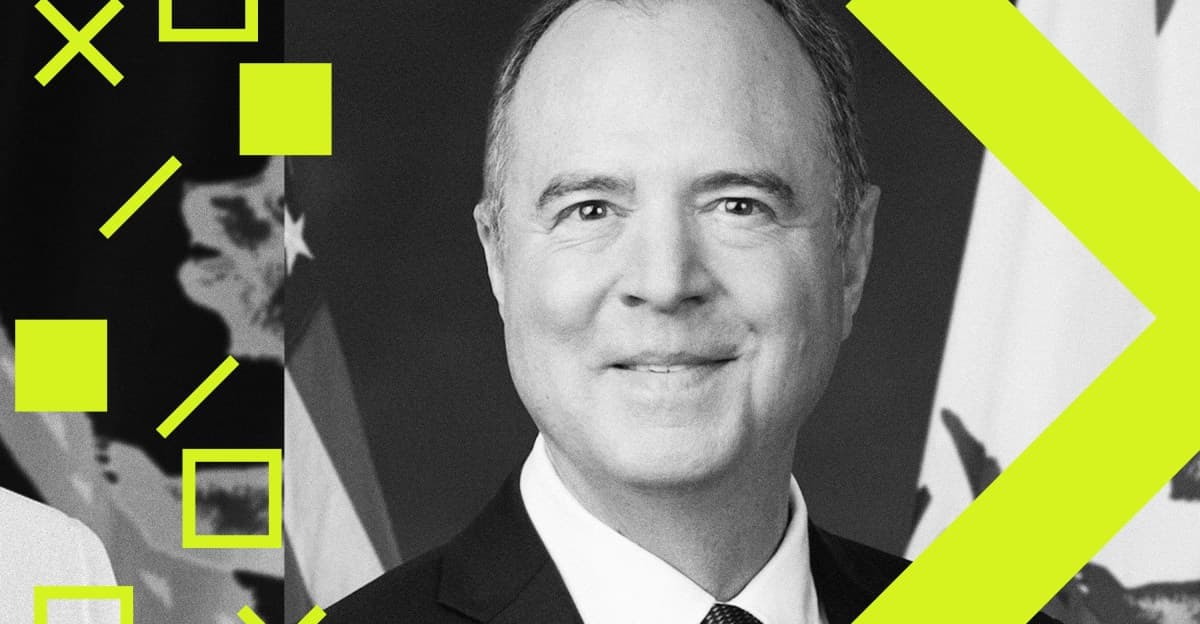
Adam Schiff: Congress vs. AI, Caught Between Section 230 and Murphy's Law
The Democratic senator from California tears apart the voluntary pact signed at the White House and pushes for an "FDA for AI"—while admitting Congress has never known how to regulate tech.
Source · The Verge – Decoder · Sen. Adam Schiff on making Congress relevant in the AI age