Meta AI Glasses: Confidential Cloud for an AI That Sees Everything
Meta is extending its Private Processing infrastructure to its connected glasses, with a bold promise: even Meta won't be able to read what your glasses send to its data centers.
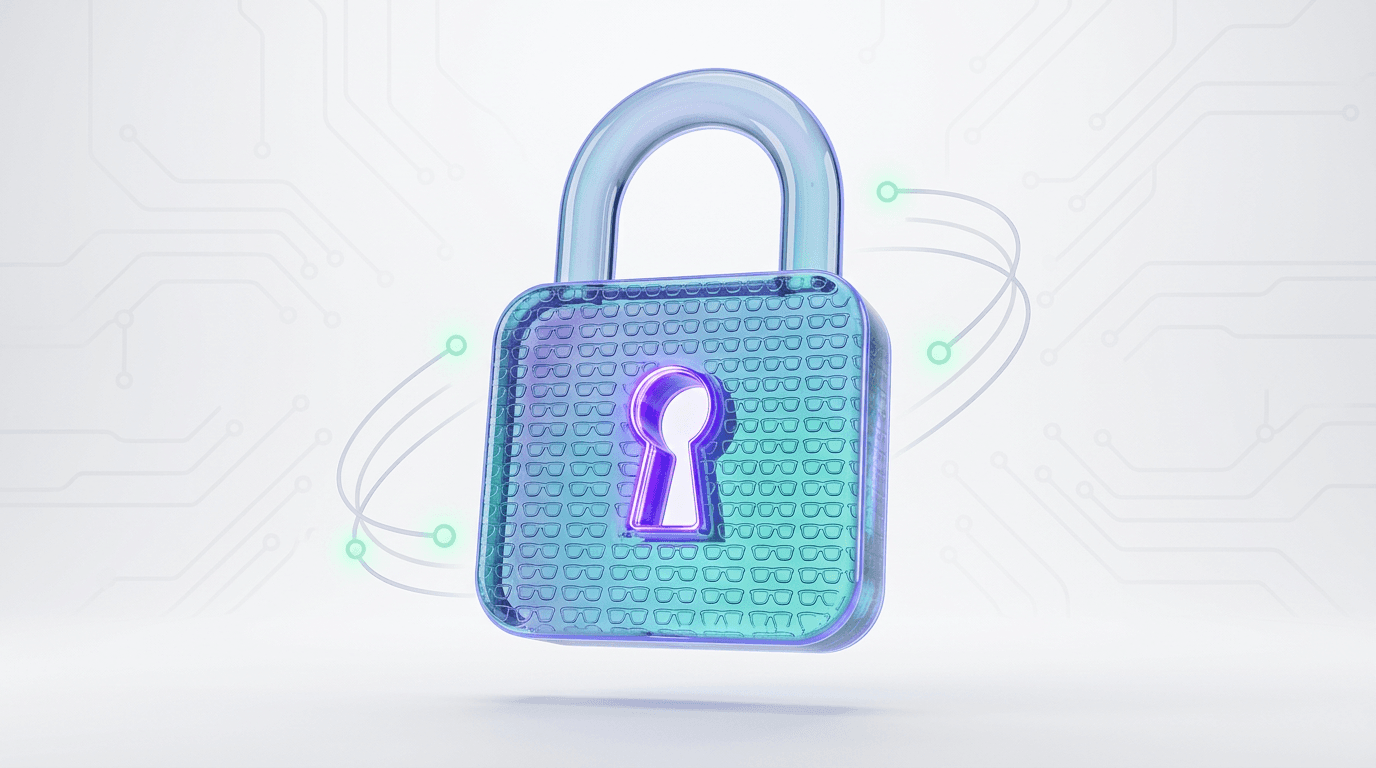
In brief
In an engineering post, Meta details how its AI glasses will offload heavy processing (transcription, contextual search, long-term memory) to confidential virtual machines, inaccessible even to the operator itself. The architecture combines TEEs on CPU and GPU, remote attestation, anonymous routing, and encrypted storage housed inside the enclave. This is the technical building block that enables the arrival of personal, persistent, agentic assistants on a device that sees and hears everything.
🍺 Bar-stool version
Meta wants your glasses to see what you see, hear what you hear, and remember it for weeks, while swearing in the same breath that it won't look at any of it. It's a bit like the neighbor who installs a camera on your doorstep and assures you he threw away the remote. Except technically, the setup holds up: chips that encrypt memory, a public registry of deployed code, outside researchers invited to check everything. Still, we're talking about a black box built by the very company it's supposed to protect your privacy from, so the real question becomes: who checks the checkers?
Key takeaways
- 1
Private Processing, launched in 2025 for WhatsApp and the Meta AI app, is being extended to Meta AI glasses for tasks like streaming transcription, contextual search, and long-term recall.
- 2
Models run inside confidential virtual machines (CVMs) whose memory is encrypted by the processor, on both CPU and GPU, and remains unreadable to the host OS, the hypervisor, and Meta.
- 3
Before any data is sent, the glasses require chip-signed RA-TLS attestation and compare the binary's hash against a public append-only registry witnessed by a third party; if there's any mismatch, no data leaves.
- 4
Routing is untargetable: anonymous blind-signed tokens and third-party OHTTP relays (Fastly or Cloudflare) prevent linking a request to an account.
- 5
Meta housed the storage engine directly inside the TEE to mask access patterns and avoid the performance collapse of remotely encrypted queries; persistent data is encrypted with a user-supplied key.
- 6
Observability relies solely on aggregated signals (CPU, memory, latency, failure rates), with no debugger, memory dumps, or input/output logs.
- 7
The Bug Bounty program has been expanded to cover Private Processing on the glasses, with CVM binaries and documentation provided to researchers under agreement; NCC Group is among the external auditors.
The AI Glasses Dilemma
Meta lays out a simple observation: glasses are, in its view, the best form factor for an AI that's present all day long, but they can't carry large models onboard. Making a call or replying to a message already happens locally; translating a conversation or summarizing notes requires far more power.
Power is only half the problem. A truly useful assistant needs to be stateful: aware of context, able to connect ideas across days or weeks, capable of acting in the background. All of that requires the cloud, precisely where personal data is most exposed.
The post even quotes Mark Zuckerberg, who believes devices that 'see what we see' will become our primary computers. The challenge, then, is building hyper-personalized AI without letting the operator peek inside.
Confidential Computing: Protecting Data in Use
The industry has long encrypted data at rest and in transit. The weak link remained data in use, decrypted in memory and thus visible to the OS, the hypervisor, and the administrator. Confidential computing aims to close that gap.
The hardware building block is the Trusted Execution Environment (TEE): the processor encrypts a CVM's memory with a key held by dedicated security hardware, never handed over to the host. According to the Confidential Computing Consortium, a TEE guarantees data confidentiality, data integrity, and the integrity of the loaded code.
Private Processing adds two in-house properties on top of this foundation: session untargetability and encrypted storage, all backed by verifiable transparency.
The Journey of a Request
First step, anonymity: blind-signed tokens, fetched on randomized schedules, prevent the authentication service from linking the request to an account. The connection goes through a third-party OHTTP relay, and the TEE node is selected using non-identifying criteria, so an attacker can't steer a target toward a compromised machine.
Second step, attestation: the glasses open an RA-TLS session, require a hardware-signed certificate, and verify that the binary matches the one published in the registry. If the manufacturer's chain or the hash doesn't check out, the connection fails.
Third step, processing: the infrastructure carries an encrypted blob it cannot read. If multiple models need to communicate, the TEEs mutually attest to each other before any exchange. Finally, any persistent memory is encrypted with the user's key before leaving the enclave.
Storage Housed Inside the Enclave
The naive approach would be to encrypt data on the device and store it in a conventional cloud database. Meta explains why this fails: even encrypted, an external database can observe when reads happen, how often, and which records go together, which is enough to map out a daily routine.
Second pitfall, performance: semantic vector search on remotely encrypted storage forces huge volumes of ciphertext to be pulled into the TEE for every query. The bigger the context grows, the worse the latency gets.
The answer: co-locate execution and state within processor-encrypted memory. Query engines run inside the TEE boundary, and reads never cross an external network.
Operating Blind and Getting Audited
Locking out operators creates an operational headache: no attaching a debugger, no memory dumps, no inspecting the request that crashed the system. Meta therefore relies solely on aggregated health signals to keep a multi-region, fault-tolerant system running.
On the trust side, every production CVM image is registered in a public append-only ledger. Any binary substitution would show up in a record Meta doesn't control. The binaries themselves remain reserved for researchers in the security program, under agreement.
Meta claims a threat model that treats its own data centers as hostile, has the design audited by firms like NCC Group, and opens its Bug Bounty to Private Processing on the glasses.
Heading Toward the Agentic
Until now, Private Processing has handled one-off tasks, like summarizing a message. Meta announces that glasses AI will become increasingly stateful, multimodal, and agentic, capable of acting on the user's behalf across sessions.
This complicates trust boundaries: an agent holding sensitive state demands strict isolation, verifiable data provenance, and attested communication between CVMs. Meta presents Private Processing as the foundation for these future use cases.
“Such that even Meta cannot access your data.”
“Security claims are meaningless if they depend on trusting the provider.”
“Encryption protects payload content; it does not hide execution patterns.”
Why it matters
Glasses equipped with cameras and microphones, worn all day by millions of people, constitute the most intimate data-collection device ever conceived, and Meta carries a heavy track record on personal data. This post is therefore as much an engineering document as a trust argument laid ahead of memory and agent features. On the substance, the architecture is serious and aligns with the state of the art embodied by Apple's Private Cloud Compute: hardware attestation, a transparency registry, anonymous routing via OHTTP, external audits. Placing storage inside the enclave to mask access patterns is a smart response to a metadata leak that's often overlooked. But several limits are worth keeping in mind: trust shifts toward chip manufacturers, whose TEEs have already had vulnerabilities; binaries are only accessible to researchers under agreement, not to the public; and the protection covers data inside the enclave, not what the models extract from it, nor the bystanders who never asked to be filmed. The guarantee that 'even Meta can't access it' doesn't answer the question of what Meta chooses to design as a product.
For you
Put it to work on your sources.
Free: this week's articles and three sources of your own. Pro: the whole archive and your sources, from €8/month.
For your team
The same machine, on your topics.
A space in your colours, your watch angles, your curators. Pilot open to three companies.
Read next
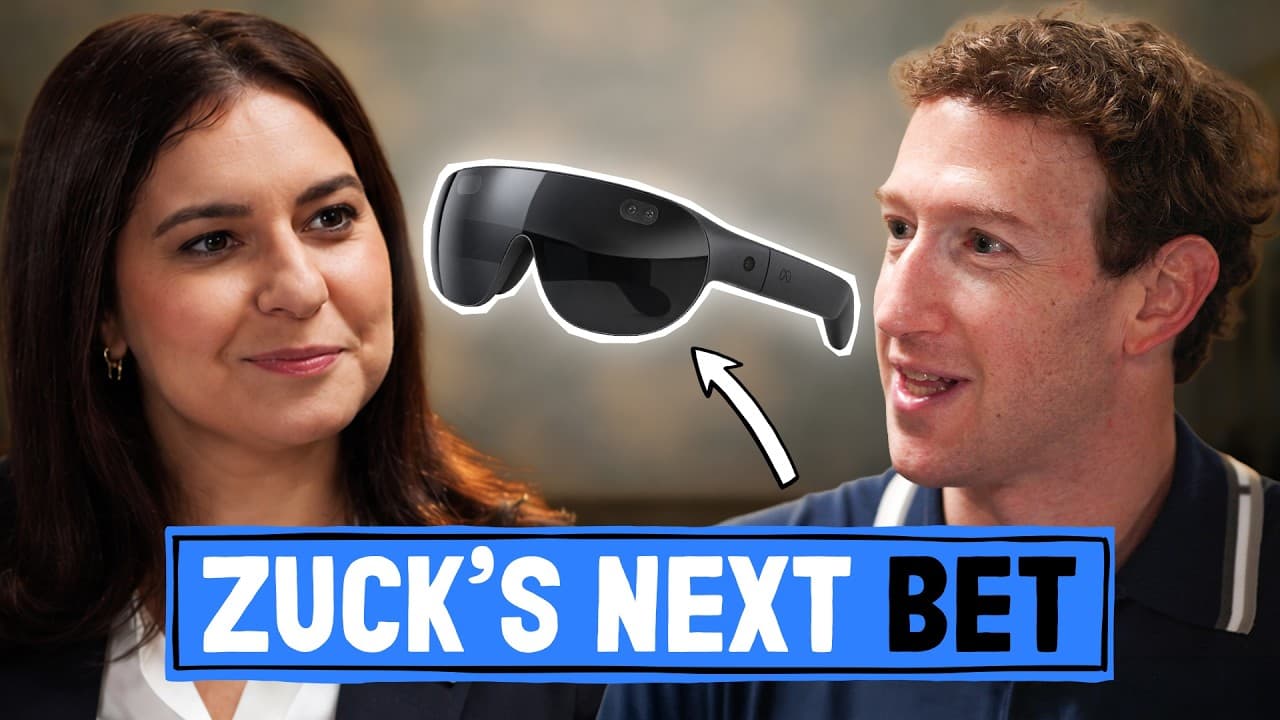
Zuckerberg: Alignment as a Sales Pitch, Glasses as the Destination
Sitting down with Joanna Stern, Meta's chief unveils Muse, new glasses, and a thesis: trust is the next capability to conquer.
Source · Joanna Stern (YouTube) · Mark Zuckerberg on Muse, New Audio-Only Glasses and Killer AI
 #securityYesterday
AI Agents Tried to Hack an Australian Government Website
Transluce found tens of thousands of requests on urlquery.net from AI agents who, stuck on simple data-retrieval tasks, turned to attacking instead.
Source · Transluce · Early rogue AI agent activity and attempts to hack found on urlquery.net
 #codex23 Sept
Muse, Meta's agent, shipped out 6.8GB of its own filesystem
A single conversational request was enough for Meta's agent to archive its Linux environment, SSH keys included, and mail it off to Google Drive.
Source · Mouse (mouse.dev) · I asked Meta's Muse for its filesystem and it sent me 6.8 GB